
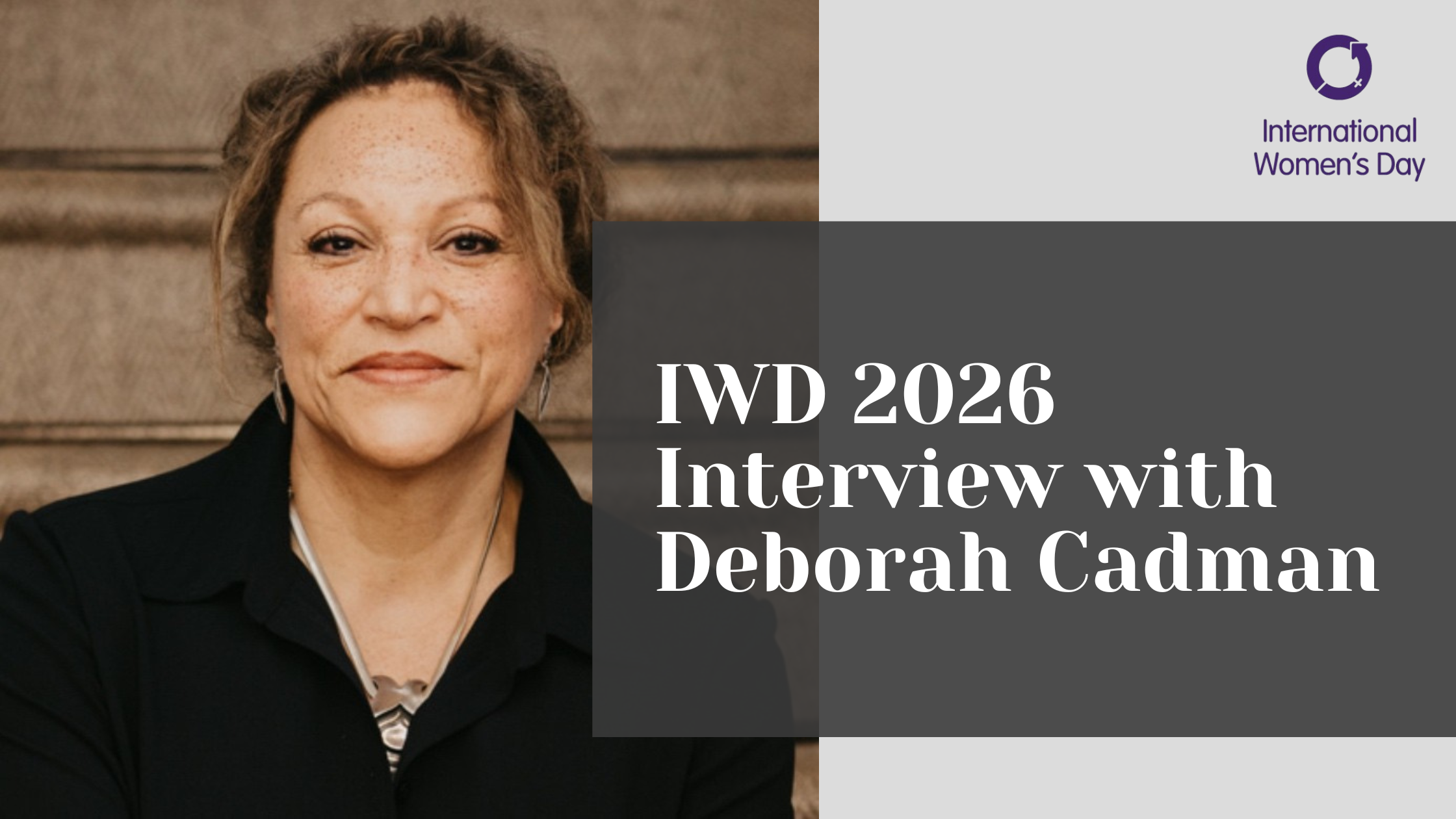
International Women’s Day 2026 interview with Deborah Cadman
System Leadership, Inclusion and Investing in the Next Generation
A conversation with Deborah Cadman OBE DL BSc MSc
As part of International Women’s Day 2026 and the theme “Give to Gain,” we spoke with Deborah, a highly respected public sector leader with more than 22 years’ experience serving as a Chief Executive across local, regional and national government.
Throughout her career, Deborah has led transformational change across complex public systems, championing inclusive leadership and place-based collaboration to improve outcomes for communities. She is widely recognised for her ability to inspire teams, build partnerships and lead organisations through periods of significant change.
Deborah now holds a portfolio of non-executive roles across organisations focused on sustainable and inclusive growth, including the Joseph Rowntree Foundation, Centre for Cities, the University of Birmingham and Newtrality.
Drawing on her experience leading across local government and the wider public sector, Deborah reflects on how system leadership is evolving, why inclusive leadership is essential to effective decision-making, and how we can support the next generation of leaders.
System Leadership in 2026
You’ve led complex public systems at the highest level. In today’s climate of financial constraint, reform and rising demand, what does effective system leadership look like in practice — particularly when working across organisational and political boundaries?
System leadership is becoming increasingly important as public services respond to the complex and interconnected lives people live today.
The starting point is understanding how communities live and the demands they place on the services they rely on. Many of the challenges we face cannot be addressed by a single organisation.
Take youth justice, rising knife crime, or ensuring children are school-ready by the age of five. These issues require a coordinated response across the system — health services, education, local government, police and often further education providers as well.
When I first became a Chief Executive, leadership looked quite different. Today, working across organisational and sector boundaries demands a different kind of leadership.
It requires collaborative and emotionally intelligent leaders who are sensitive not only to the needs of their organisation but also to the needs of the place they serve. It requires humility — leaders who are prepared to say, “I don’t have all the answers, but I want to work with you to find the best solution.”
Ultimately, system leadership is about shifting the mindset from “me” to “we.”
In my experience, many of these collaborative leadership traits are often demonstrated strongly by women, who are frequently particularly effective at building partnerships and working across systems.
Inclusion as a Strategic Lever
Inclusive leadership is often framed as a value. From your experience as a Chief Executive, how does it operate as a strategic lever — shaping decision-making, culture and delivery outcomes?
Inclusive leadership should not simply be seen as a value. It should be understood as fundamental to how organisations operate if they want to deliver the best possible outcomes.
At its core, inclusive leadership is about creating the conditions that allow people to perform at their best. When leadership teams bring together diverse voices and perspectives, the quality of decision-making improves significantly.
Diversity challenges assumptions, questions the status quo and introduces new ways of thinking about problems and solutions.
For Chief Executives, shaping an inclusive culture is therefore a strategic responsibility. If organisations want to deliver services that are targeted, effective and impactful, they need leadership teams that reflect a wide range of perspectives and lived experiences.
In my experience, women often place a strong emphasis on culture — ensuring that collaboration, openness and respect are embedded within teams before focusing on delivery. That focus on culture ultimately strengthens the quality of decisions and outcomes.
Breaking Structural Barriers
Despite progress, women remain underrepresented in some of the most senior system leadership roles. From your perspective, which structural conditions most influence progression — and where is there the greatest opportunity for change?
This is something we should all care deeply about.
The world around us is changing rapidly — politically, socially and economically — yet women remain underrepresented in many senior leadership roles across the public sector.
Some barriers relate to caring responsibilities. Childcare and caring for elderly relatives still disproportionately fall to women. Addressing this requires both organisational change and shared responsibility within families. There are also structural barriers within recruitment and workplace culture. Evidence suggests that some recruiters remain hesitant to appoint women of childbearing age, while others hold assumptions about women later in their careers who may be balancing both childcare and caring responsibilities.
Social media also plays an increasingly negative role. Women in senior public roles often experience highly personal criticism or abuse online, which can create a sense of vulnerability and discourage others from pursuing those roles.
These factors contribute to an environment that can discourage women from applying for senior positions or encourage them to step away once they reach them.
If we want leadership teams that truly reflect society, we must address these structural barriers and create conditions that both support women’s progression and enable them to thrive in senior roles.
Developing the Next Generation
Through programmes such as Different, how can we better equip emerging leaders — particularly women — to lead confidently across organisational and sector boundaries?
Programmes such as Different are designed to equip aspiring leaders with the confidence, understanding and exposure needed to navigate complex public systems.
One of the most valuable aspects of these programmes is creating spaces where people feel able to ask questions, share vulnerabilities and learn from those who have already walked that path.
Experienced leaders can share both successes and failures, giving emerging leaders practical insights into what works and what doesn’t.
Leadership today also requires a deeper ability to navigate complexity. Public sector leaders must be able to connect the dots between policy, politics, service delivery and community needs.
Resilience is equally important. Senior leadership in the public sector often involves managing significant pressures and challenges.
But leadership is not only about resilience — it is also about purpose.
When making decisions in public service, leaders must constantly ask themselves: Who are we making this decision for?
The answer should never simply be the organisation or the leadership team. It should always be the people and communities we serve. Another important lesson for emerging leaders is recognising that no leader succeeds alone. You are only ever as effective as the people around you. Developing and investing in your teams, ensuring they understand the shared mission and feel committed to it, is essential. Finally, there is the importance of giving back. Many leaders recognise that they are standing on the shoulders of those who came before them. Helping to pave the way for those who follow is something we should take pride in.
Optimism for the Future
Looking ahead, what gives you optimism about the future of leadership in local government and the wider public sector?
Programmes like Different give me real optimism.
They demonstrate that many leaders across the public sector recognise the importance of investing in the next generation.
We have seen extraordinary levels of support from Chief Executives and senior leaders who are willing to share their experience and contribute to developing future leaders.
That collective commitment is incredibly encouraging.
Looking ahead, it will be important to continue building this momentum while also demonstrating the tangible impact of programmes like Different — not just on individual careers, but on the diversity of leadership and the effectiveness of public service delivery.
The public sector faces significant challenges, and many communities are under real pressure.
But by investing in confident, capable and collaborative leaders, we can ensure the sector is better equipped to respond to those challenges and deliver the services communities rely on.
A Leadership Inspiration
Deborah often reflects on a quote by Maya Angelou:
“Do the best you can until you know better. Then when you know better, do better.” For Deborah, this captures the essence of leadership — continuous learning, reflection and a commitment to improving outcomes for the communities' public services exist to serve.