
LGR Isn’t Just a Merger: Lessons from the Private Sector and Why They’re Not Enough
Local Government Reorganisation LGR transformation discussion
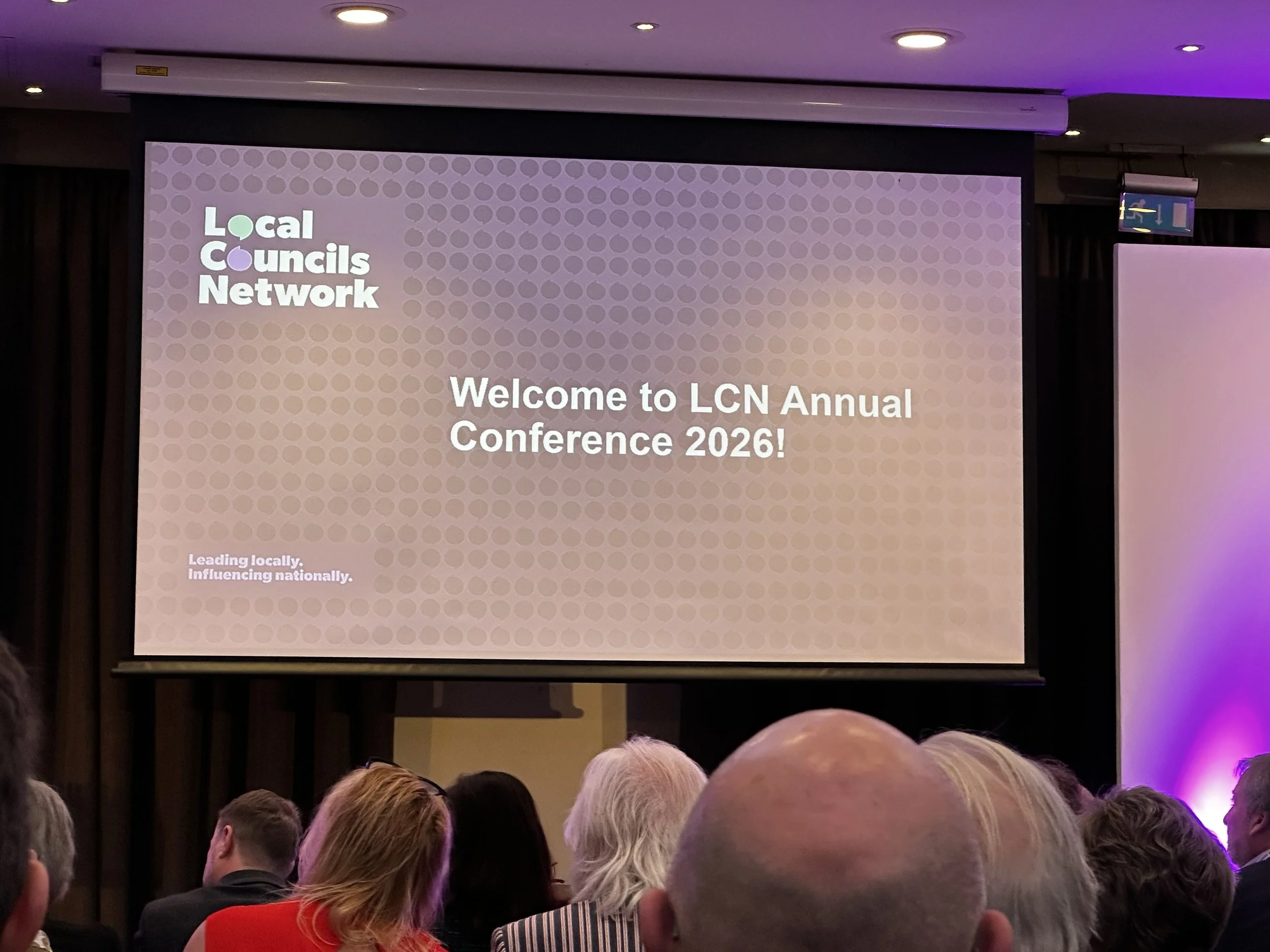
At a recent breakout session hosted by Newtrality at the Local Councils’ Network (LCN), we brought together local government leaders to explore one of the most pressing questions facing the sector today:
What can Local Government Reorganisation (LGR) learn from mergers and demergers in the private sector?
We’ve spent years working alongside organisations navigating complex mergers, integrations and transformations. So, when LGR began to take shape, one thing felt immediately clear to us.
This is going to be one of the hardest transformations the sector has faced.
Led by Mike Dearing and Pip Peel, alongside guest panellist Dr Justin Ives (CEO, South Derbyshire District Council), the session combined practical experience from large-scale transformation programmes with real-world insight from within local government.
What followed was a candid and, at times, uncomfortable discussion.
Because while LGR is often described as a series of mergers and demergers, the reality is far more complex.
This article builds on that conversation and captures the key insights, challenges and practical lessons for those leading or supporting LGR programmes.
LGR: More than a merger
LGR represents the most significant structural change in local government for a generation.
In many areas, counties will disaggregate while district councils’ merge. In effect, this is both a merger and a demerger happening at the same time.
“This isn’t one organisation taking over another. It’s multiple organisations coming together, each with their own identity, leadership and priorities.” — Dr Justin Ives
Unlike the private sector, this isn’t about commercial gain. It’s about delivering outcomes for communities while maintaining essential services, navigating political complexity and building something entirely new.
Leaders are being asked to redesign organisations, maintain critical services, align multiple leadership teams and do it all under intense scrutiny.
There is very little margin for error.
The uncomfortable truth: most mergers fail
In the private sector, mergers and acquisitions are often seen as business as usual.
But the data tells a different story.
Around 75% of mergers deliver little or no value. In many cases, profits and shareholder value decline post-merger and strategic objectives are not achieved.
“The hard part isn’t deciding to merge. It’s making it work afterwards. That’s where most organisations underestimate the challenge.” — Pip Peel
More than half of failures occur during the integration and transition phase.
Why integration is where success is won or lost
Mergers don’t fail because of intent. They fail because of execution.
Integration is where complexity multiplies. Systems must be aligned, cultures must converge, governance must be redefined and services must continue without interruption.
We’ve seen first-hand how quickly well-intentioned programmes can become overwhelmed at this stage, when complexity, pressure and expectation all collide.
“In local government, you don’t get the luxury of pausing services while you reorganise. Everything has to keep running, and that changes the nature of the challenge entirely.” — Mike Dearing
This is where many transformation programmes succeed or fail. At Newtrality, we work with organisations to bring clarity, alignment and momentum through this stage of delivery.
Final thought
There is no blueprint for this.
The success of programmes like LGR is not determined by the quality of the strategy. It is determined by the discipline of execution.
How Newtrality supports LGR programmes
At Newtrality, we care deeply about this agenda because we’ve seen what it takes to make complex transformation actually work.
Success does not come from having the best plan on paper. It comes from creating the clarity, focus and momentum to deliver it.
If you’re navigating Local Government Reorganisation and want to ensure your programme delivers in practice — not just on paper — we’d welcome a conversation.
Newtrality supports organisations to turn complex transformation into delivered outcomes.