
AI Series: Are you asking the right questions?
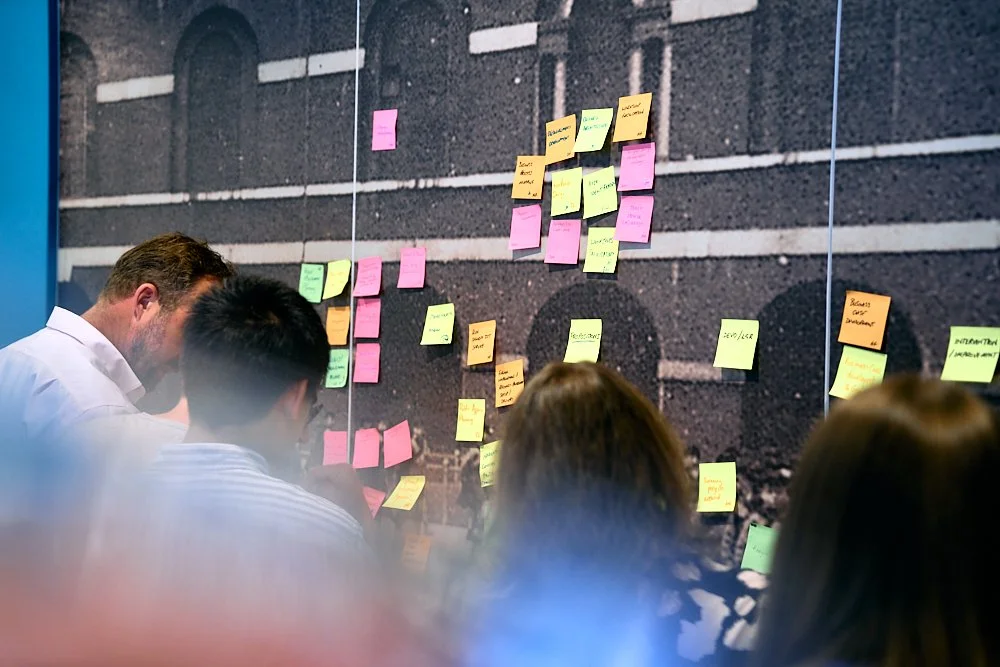
Questions on a wall
Many councils are currently discussing AI through the lens of technology – as if AI is the solution in its own right. But if AI is only discussed as a technology opportunity, councils risk missing the much bigger transformation opportunity.
There is a lot of focus and hype around AI right now, including the inevitable barrage of marketing emails from AI companies telling Senior Leaders how their latest AI solution can solve all their operational and financial woes. With all this pressure it is understandable that some Senior Leaders can be heard saying “we need to do more AI stuff” or words to that effect, but as with anything new, the question that Senior Leaders need to ask is: “how can AI help us solve the challenges we face?”
An impact of AI may not just come from the introduction of a new tool. It may come from the questions it forces us to ask about the way services are designed, delivered and improved.
For local government leaders, this means AI increasingly needs to feature right across all conversations about the organisation.
It has relevance to:
service redesign
customer experience
workforce planning
operating models
procurement
organisational development
communications
financial sustainability
data quality
performance management
projects and programmes
In each of these areas, AI changes assumptions about what is possible, what is practical and what residents may come to expect.
Challenging assumptions
Many of the business cases, operating models and service designs that councils rely on today were developed around assumptions that have remained relatively stable for years.
This includes assumptions around transaction volumes, staffing levels, administrative effort, customer contact patterns, and access to information. AI has the potential to rapidly change some of these.
A business case built around today's processes, staffing requirements and transaction volumes may need to be revisited as AI changes what is possible.
That does not mean every service should immediately be redesigned around AI. Nor does it mean anticipated benefits should be accepted without scrutiny.
However, it does mean that decisions made today should be informed by an awareness of how rapidly the environment around them is changing.
A transformation conversation
This is why AI should sit alongside broader transformation thinking rather than within a standalone technology workstream.
When councils review customer journeys, redesign services, explore shared service opportunities, reconsider operating models or develop medium-term financial plans, AI should increasingly form part of the discussion.
Not because it has all the answers, but because it is becoming one of the factors that shapes what future service delivery could look like.
The organisations likely to gain the most value from AI over the coming years may not be those with the fastest uptake, or most sophisticated technology strategies they may be the ones that become most effective at asking where AI can support better outcomes for residents, staff and communities.
Looking beyond the technology
The challenge for local government is not simply adopting AI. It is understanding what AI means for the way the organisation works.
Digital teams will play a critical role in enabling safe and effective use of the technology. But the conversation cannot stop there. Because AI is no longer just a question about systems and software. It is increasingly a question about the services, people, and processes which shape local government.