
Four priorities shaping the future of local government
The conversations from LGA Conference 2026 continue to resonate across the sector.
The conference brought together councils, partners and colleagues from across local government at a time when the sector is navigating significant and increasingly complex challenges.
Financial pressures and rising demand remain, but councils are also responding to local government reorganisation on an unprecedented scale, a changing political landscape, rapid developments in AI and wider public service reform, all while continuing to deliver essential services for their communities.
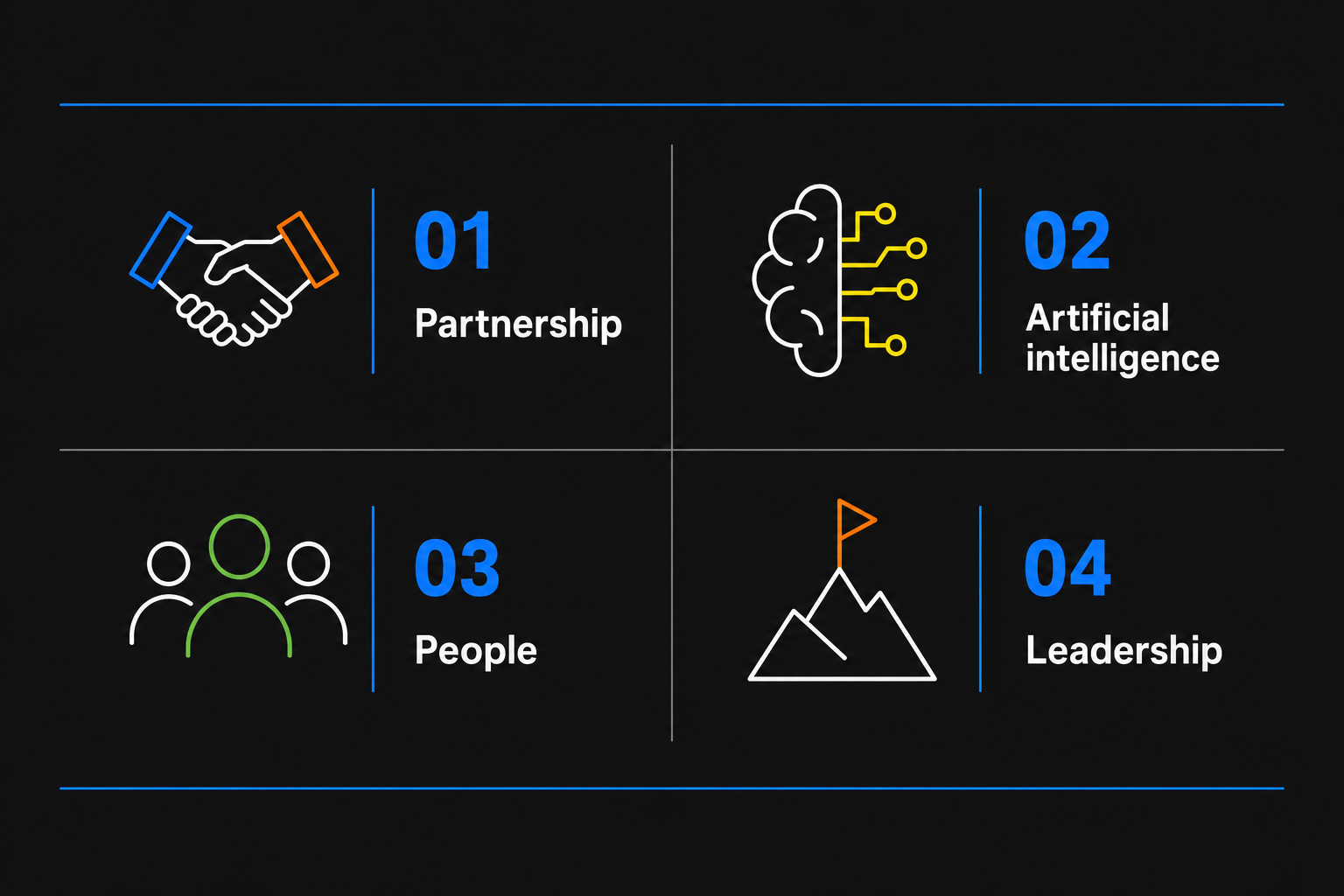
While every organisation is approaching these challenges from a different starting point, four priorities consistently emerged through our conversations at the conference. We believe they will continue to shape the sector over the coming year.
1. Partnership is becoming the foundation for change
Successful transformation cannot happen in isolation.
Whether tackling local government reorganisation, redesigning services or improving financial sustainability, meaningful progress depends on councils, partners and communities working together.
Effective partnership is about more than governance structures. It requires trust, shared responsibility and a willingness to understand different perspectives while remaining focused on achieving better outcomes for residents.
As the challenges facing councils become increasingly interconnected, the ability to build relationships, share learning and work across organisational boundaries will be critical.
2. Artificial intelligence is moving from discussion to delivery
The conversation around AI is changing.
Rather than asking whether AI has a role in local government, councils are now considering where it can deliver genuine value and how it can be introduced responsibly.
Used thoughtfully, AI has the potential to reduce administrative burdens, improve access to information and create more capacity for staff to focus on higher-value work. However, successful adoption will depend on strong governance, clear accountability and maintaining the trust of both employees and the public.
Technology alone will not deliver transformation. It must be applied with purpose and used to support people, strengthen services and enable better decision-making.
3. Transformation must remain focused on people
Financial pressures inevitably influence transformation decisions, but sustainable change cannot be driven by savings alone.
Residents and communities must remain central to decision-making, particularly when councils are navigating complex programmes such as local government reorganisation, service redesign and large-scale organisational change.
The strongest transformation programmes balance strategic ambition with practical delivery. They consider not only how an organisation needs to change, but what that change will mean for employees, partners and the people who rely on its services.
Ultimately, transformation succeeds when organisational change translates into meaningful improvements for communities.
4. Leadership matters more than ever
Periods of uncertainty require a particular kind of leadership.
This is not simply leadership defined by hierarchy. It is the ability to bring people together, create clarity, make difficult decisions and build confidence through change.
Successful organisations invest not only in programmes, structures and processes, but also in the capability, culture and relationships that enable those changes to take hold.
As councils respond to an increasingly complex environment, strong and distributed leadership will remain one of the greatest enablers of sustainable transformation.
Turning reflection into action
Our conversations at LGA Conference reinforced what we see every day through our work with councils across the country.
The challenges facing local government are considerable, but so are the opportunities to rethink how organisations work, strengthen partnerships and improve outcomes for residents.
From improvement and transformation to local government reorganisation and programme delivery, progress will depend on organisations working together, embracing innovation thoughtfully and maintaining a relentless focus on the communities they serve.
If your organisation is navigating change and would benefit from a practical, experienced partner, we would be pleased to continue the conversation.